
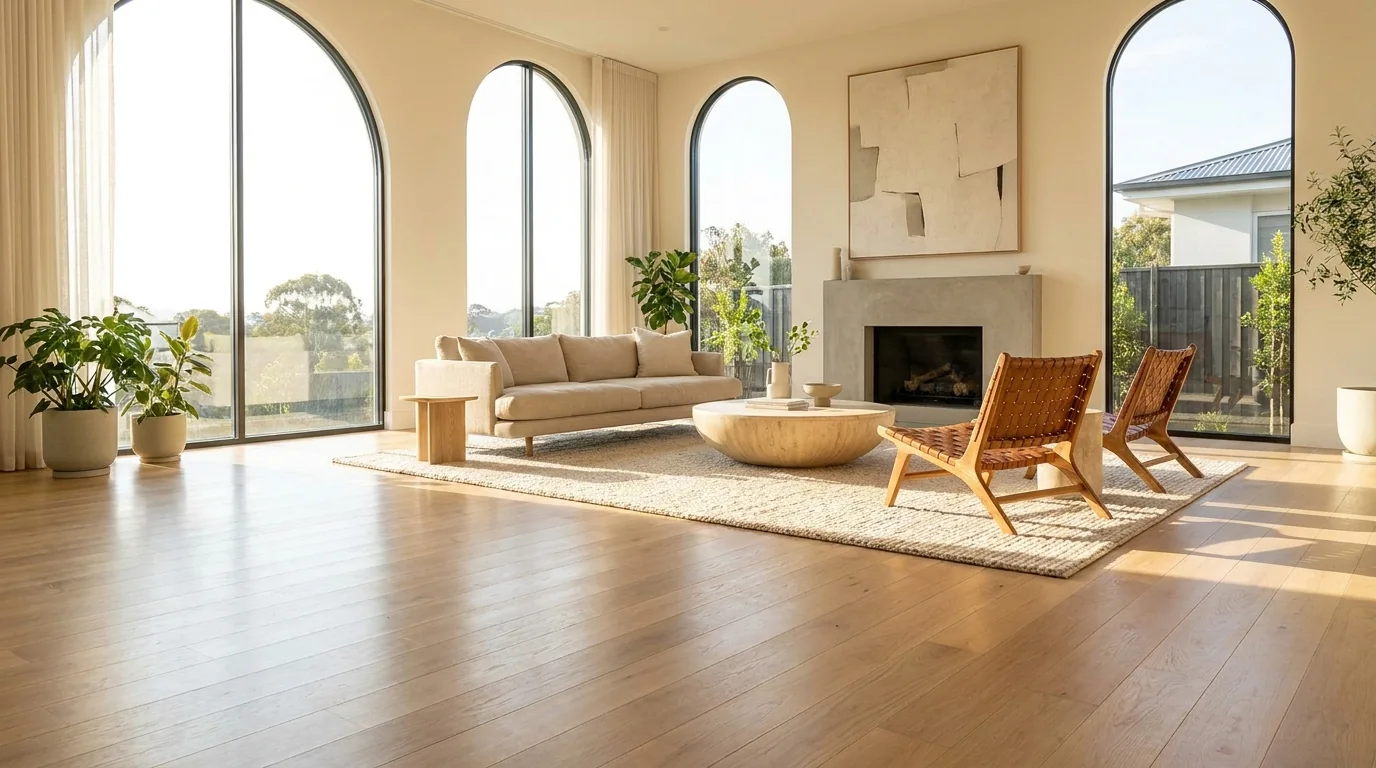
Neither finish is better. They trade off. Oil-based polyurethane ambers the wood, smells strongly for a week or two, and dries slowly. Water-based dries clear and fast with far less odor. Both are durable enough for a family home, and modern water-based products have closed most of the gap that used to exist.
So the real question isn't which is tougher. It's which set of tradeoffs suits your wood, your household and your schedule.
Key takeaways
- Oil-based ambers over time and keeps ambering. Water-based dries clear and stays close to the wood's natural color.
- Oil needs 8 to 12 hours between coats. Water-based needs 2 to 4, so the job finishes sooner (USA Pro Floors).
- Oil-based runs roughly 450 to 550 g/L VOC against 150 to 275 for water-based (ReCoat Revolution).
- Oil typically goes 7 to 10 years between recoats, water-based 5 to 7 in heavy traffic.
- Look at samples on your own floor. Species changes how both of them read.
What's the actual difference between them?
Oil-based polyurethane carries its resin in a solvent. It cures by the solvent evaporating and the oil oxidizing, which is a slow chemical process. That slowness is why it needs 8 to 12 hours between coats and why you get one coat a day.
Water-based carries resin in water. It cures mainly by evaporation, so it's touch dry in a couple of hours and two coats often go down in one day.
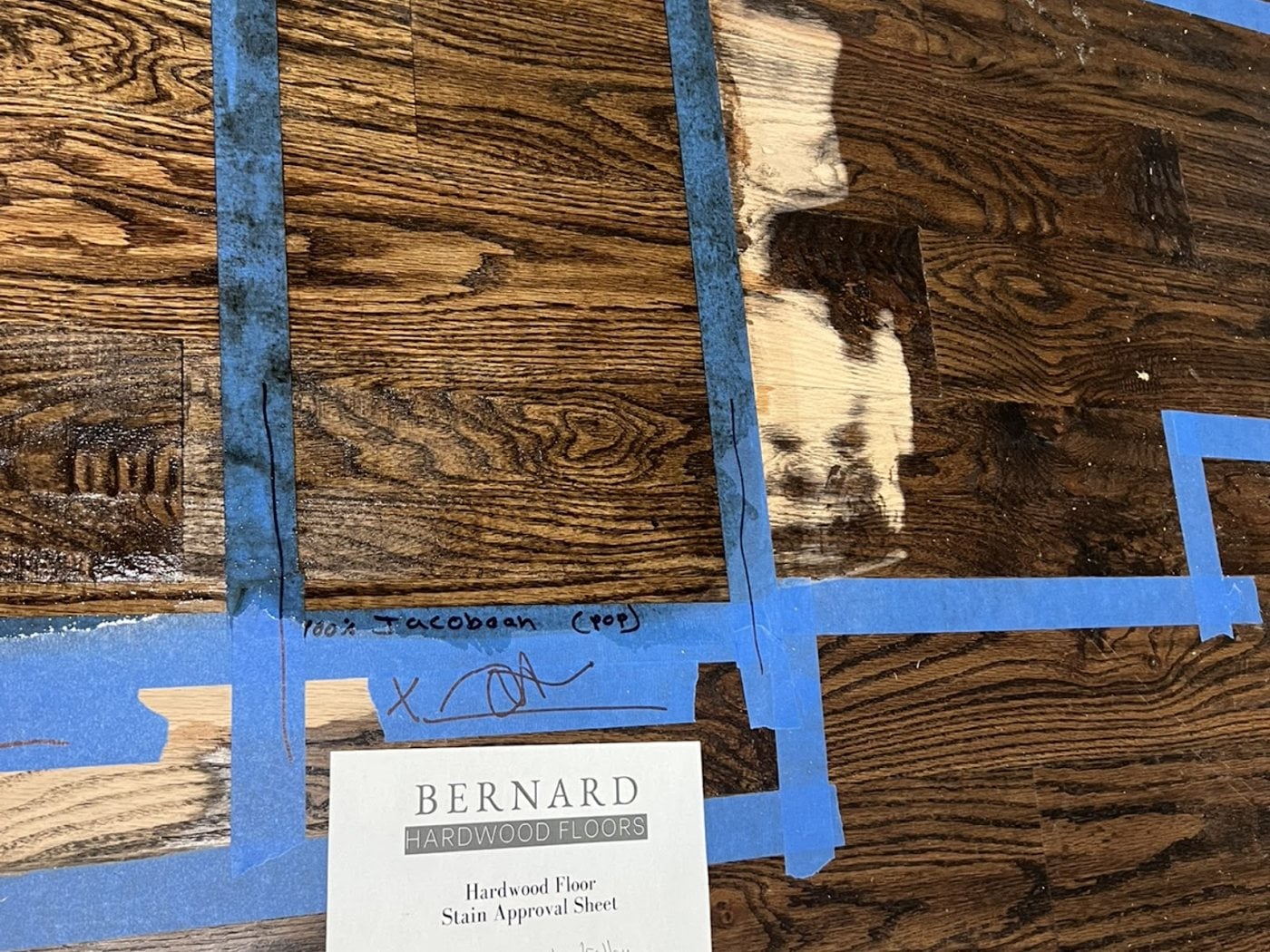
The color difference comes from the oil itself. Oil-based finish has a warm amber tone the day it goes on, and it keeps deepening for years. Water-based goes on milky and dries clear, so the floor looks much closer to the raw sanded wood.
Which one looks better?
That depends entirely on the wood and the look you want, which is why we put samples down on your actual floor before you choose.
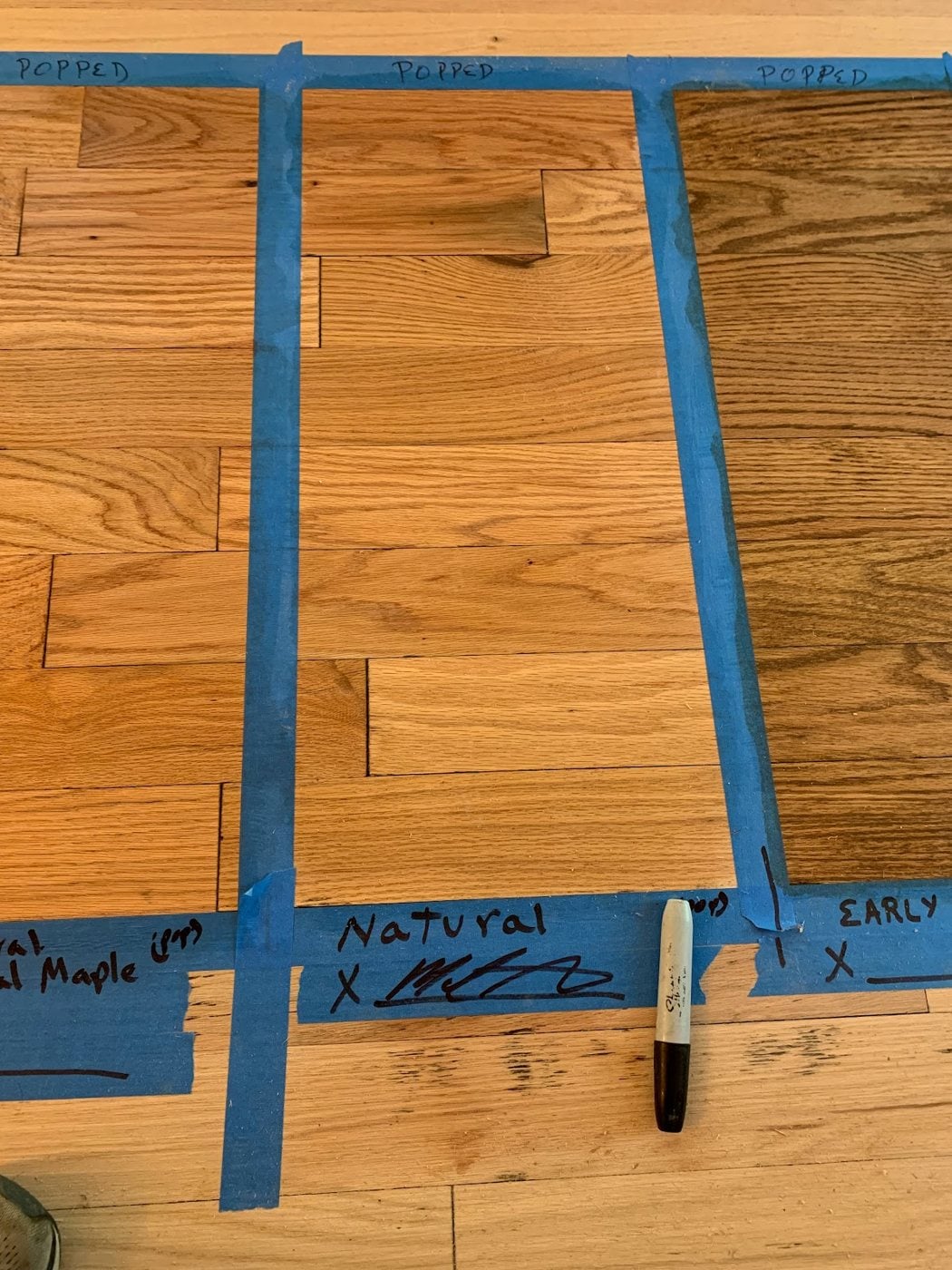
Oil-based suits red oak, older homes, and anyone who wants warmth. It makes the grain pop and gives that traditional golden tone people associate with classic hardwood.
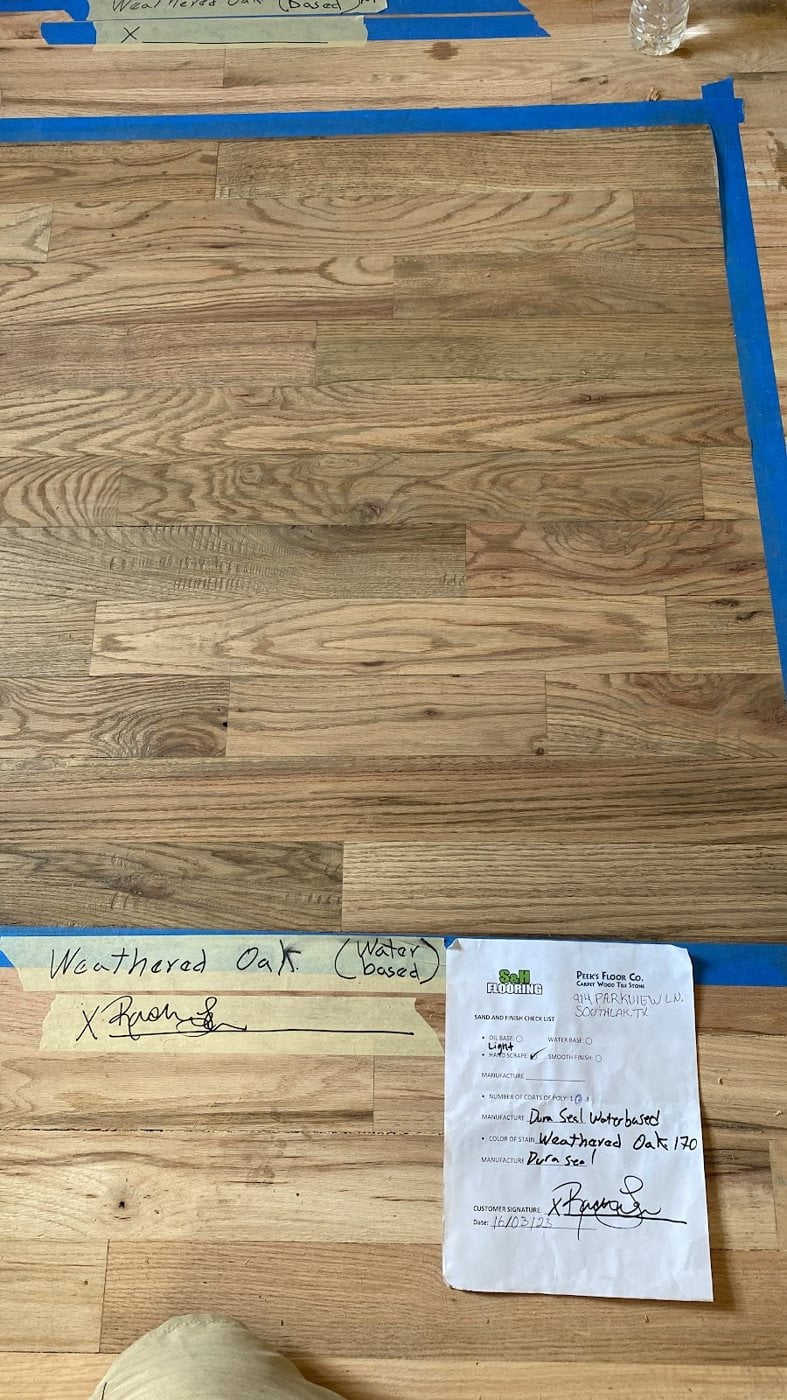
Water-based suits white oak, maple, and anyone going for a lighter, cooler or more contemporary look. If you've chosen white oak specifically because you like its pale tone, an oil-based finish will push it yellow and undo that.
Grey and white-washed floors essentially require water-based, because amber over grey turns green. That one surprises people.
Which is more durable?
Both hold up. The old rule that oil is dramatically tougher hasn't been true for a while. Commercial-grade water-based finishes now perform close to oil-based in residential use.
| Oil-based | Water-based | |
|---|---|---|
| Typical recoat interval | 7 to 10 years | 5 to 7 years, heavy traffic |
| Between coats | 8 to 12 hours | 2 to 4 hours |
| VOC | 450 to 550 g/L | 150 to 275 g/L |
| Odor | Strong, 1 to 2 weeks | Noticeable, 24 to 48 hours |
| Color | Ambers, continues over time | Clear, stays true |
| Cost | Lower material cost | Higher material cost |
Where oil still has an edge is scratch behavior. Because it ambers uniformly, small scratches blend in more readily. On a very clear water-based finish, a deep scratch that reaches wood is more visible against the surrounding color.
Which is better with kids and pets?
Water-based, for most families, and the reason is the timeline rather than the durability. Getting back into the house matters when you have children or animals who can't be reasoned with about a wet floor.
The odor difference is the bigger factor. Oil-based finish smells strongly for one to two weeks, with off-gassing continuing at lower levels after that. Water-based is noticeable for a day or two. If anyone in the household has asthma or chemical sensitivity, that's usually the deciding point.
On scratches from dog nails, both finishes scratch. What protects a floor is keeping nails trimmed and putting rugs on the paths they run, not the finish you chose. See our hardwood deep cleaning page for upkeep between refinishes.
Does the finish change the cost of the job?
Slightly. Water-based material costs more per gallon, and better water-based products often want three coats where oil takes two. That pushes material cost up.
Labor moves the other way. Water-based dries fast enough to get multiple coats down in a day, so the crew isn't on site as long. On many jobs those two effects roughly cancel out.
Finish choice is one of the factors that moves a quote within its range rather than changing which range you're in. Our hardwood flooring cost guide lays out what actually drives the number.
How do you decide?
Put both on the floor. Stain and finish read differently on every species, and differently again under your own lighting. A sample board from a showroom tells you very little about how it'll look in your living room at 4pm.
We apply test patches on your actual floor and let you look at them in daylight and at night before anything is committed. It costs nothing and it prevents the one outcome nobody wants, which is a finished floor in a color you don't like.
Frequently asked questions
Can you put water-based polyurethane over oil-based?
Only over a fully cured oil finish and with proper preparation, and results vary. On a refinish it's moot, since sanding takes everything back to bare wood. For a recoat over an unknown existing finish, a test patch is essential.
Does water-based polyurethane yellow over time?
No. Staying clear is its main advantage. Oil-based ambers immediately and keeps deepening for years, which is desirable on red oak and unwanted on white oak or grey-toned floors.
How many coats do you need?
Typically two to three. Water-based often gets three because each coat is thinner. More coats mean more protection and a deeper look, and they're cheaper to add during the job than afterward.
Which is better for a rental property?
Oil-based often makes sense. The longer recoat interval and the way scratches blend into an ambered finish both suit a property where you want the longest stretch between visits.
Is there anything besides polyurethane?
Yes. Hardwax oils and penetrating finishes give a natural matte look and can be spot repaired without recoating the whole floor, but they need regular maintenance. For most DFW households polyurethane is the practical choice.
Want to see both on your floor?
We'll put sample patches down and walk through what each one does to your specific wood, then quote it either way. No charge and no pressure.
Bernard Hardwood Floors has been family owned in Irving since 1999. Licensed and insured, 4.9 stars across 127 Google reviews.
Request an estimate or call (469) 870-5631, Monday through Saturday, 8am to 6pm.
Related reading: Sand and finish and How long does refinishing take?