

Hardwood floors gap in winter and cup in summer because wood moves with humidity, and North Texas swings hard between the two. Boards shrink in dry heated air and thin gaps open. They swell when humidity returns and the gaps close. Seasonal movement is normal. Gaps that never close, and cupping that doesn't flatten, are the ones worth a look.
Keeping indoor relative humidity in a stable band is what prevents most of it. Wood performs best between roughly 30% and 50% relative humidity, and consistency matters as much as the number itself.
Key takeaways
- Target 30% to 50% indoor relative humidity year round (Gaylord Flooring).
- Winter gaps that close again in spring are normal, not a defect.
- Above 60% to 65% RH, boards can cup or crown.
- Below 30%, gapping becomes significant and can turn permanent.
- Big swings damage floors more than a steady reading slightly off target.
Why does wood move at all?
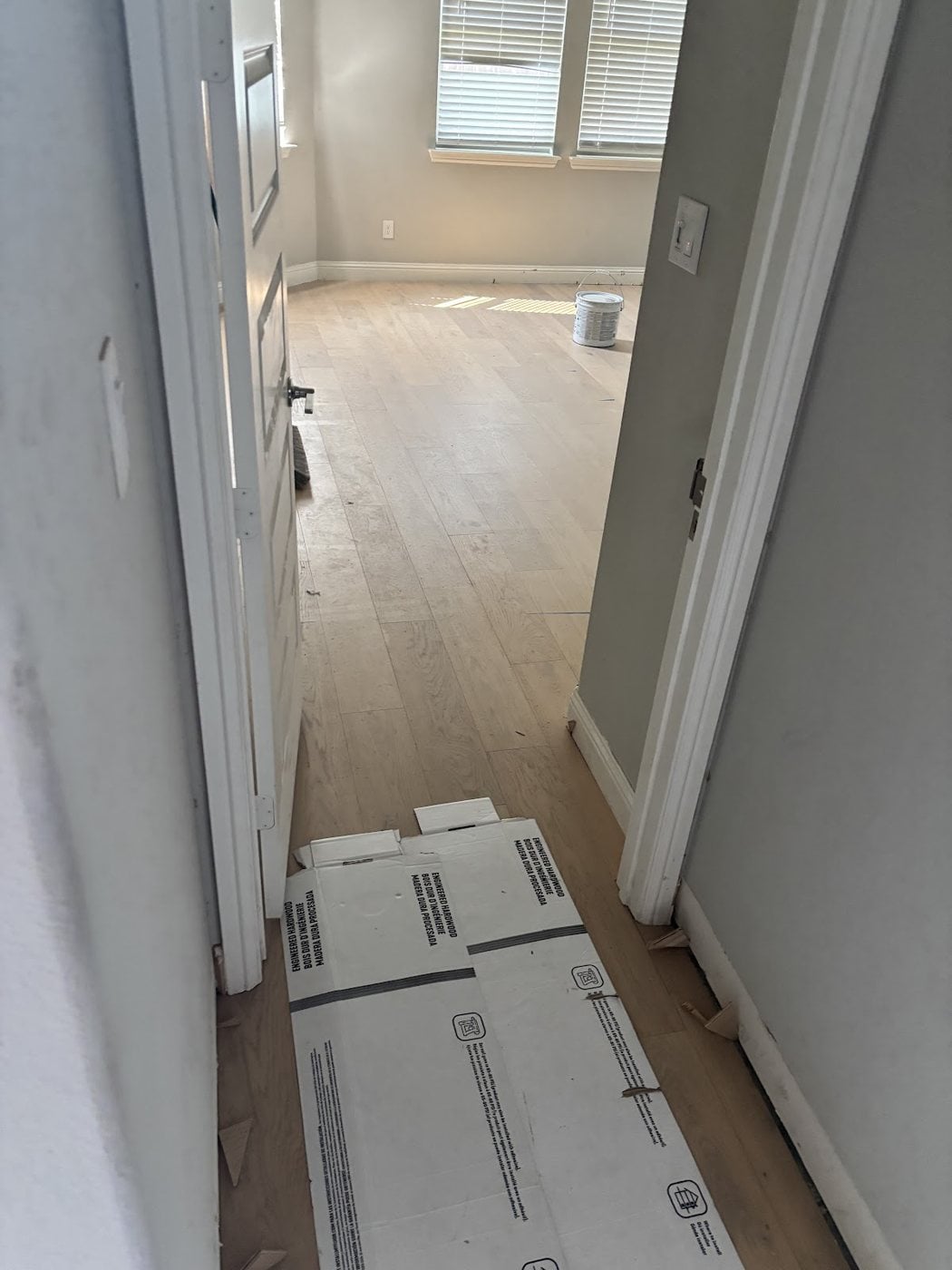
Wood is hygroscopic, which means it absorbs and releases moisture until it's in balance with the air around it. Take on moisture and the boards swell. Give it up and they shrink. That never stops, no matter how old the floor is or what finish is on it.
Movement happens mostly across the width of a board, not along its length. That's why gaps show up between boards rather than at the ends, and why a wide-plank floor shows more visible gapping than a narrow strip floor. The same percentage of movement across a wider board equals a bigger gap.
Finish slows moisture exchange but doesn't stop it. Polyurethane on the surface does nothing for the underside of the board, which is where a lot of moisture enters.
Why is this worse in North Texas?
Because our swing is severe in both directions. Summers are humid, and winters, once the heat is running, get genuinely dry indoors. A house can go from 60% relative humidity in August to under 25% in January.
Heating is the main culprit. Running a furnace doesn't just warm the air, it drops relative humidity sharply. A floor that sat comfortably all summer starts shrinking within weeks of the first cold snap.
Slab construction adds a second factor. Much of the DFW housing stock is slab-on-grade, and concrete holds and releases moisture. That's a large part of why engineered flooring is so common here: it handles the swing better than solid wood does.
Which gaps are normal and which aren't?
| What you see | What it means |
|---|---|
| Thin gaps appear each winter, close by summer | Normal seasonal movement |
| Gaps stay open year round | Worth investigating |
| One or two very wide gaps, rest fine | Possible board or fastening issue |
| Edges higher than centers (cupping) | Moisture from below, find the source |
| Centers higher than edges (crowning) | Often sanded while still wet |
| Boards lifting off the subfloor | Serious moisture, act now |
A rough guide: a gap you can slide a business card into during January, which disappears in May, is the floor doing its job. A gap you could lose a coin in, that's there in July, is not seasonal.
How do you keep it under control?
Manage the air, not the floor. Everything that actually works happens at the humidity level.
- Run a humidifier in winter. A whole-home unit on the HVAC is the reliable version. Portable units help in the rooms they're in.
- Use AC in summer. Air conditioning dehumidifies as a side effect, which is usually enough.
- Buy a hygrometer. They cost very little and take the guessing out. Put one on the floor level where the wood is, not on a shelf.
- Avoid rapid swings. Leaving a house shut and unconditioned for weeks is harder on a floor than a steady reading slightly off target.
- Wipe spills immediately. Localized wet spots cause localized cupping.
Don't wet-mop wood floors. Standing water is the fastest route to cupping, and a damp mop is fine for almost every cleaning job.
Can gaps be filled?
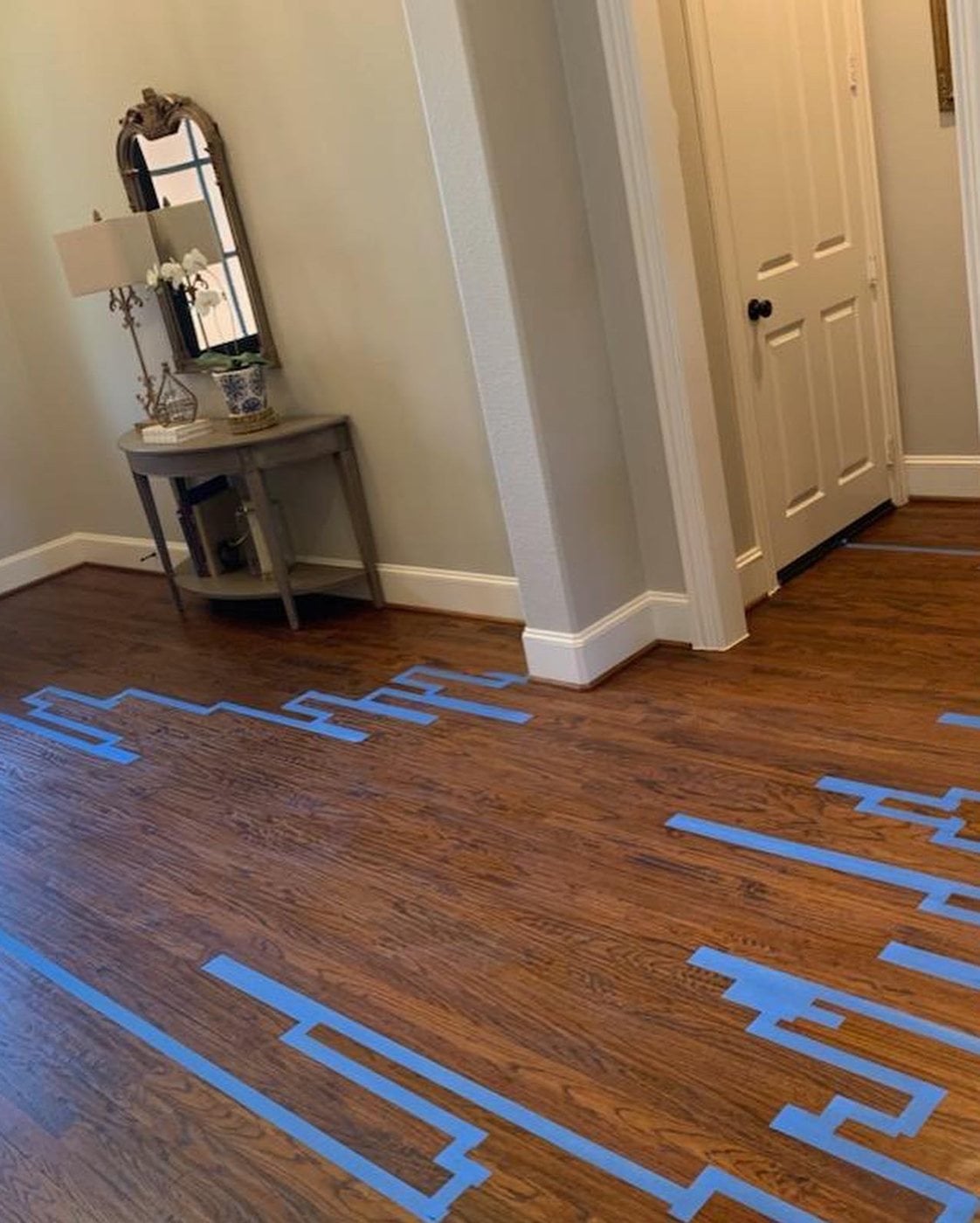
Sometimes, with caution. Filling gaps during winter when the boards are at their most shrunken is a mistake, because the filler gets crushed or pushed out when the wood expands again in summer. If it's done at all, it's done when the floor is at its most expanded.
For seasonal gaps, the honest answer is usually to leave them. They're a normal property of a real wood floor and they'll close on their own.
Permanent gaps are a different conversation. If boards have shrunk and stayed shrunk, or a few have worked loose, that's a repair. We'd rather look at it than have a filler product fail in six months. See hardwood floor repair.
What does this mean if you're installing a new floor?
It means acclimation isn't optional. New wood has to sit inside your home and come to its humidity before it goes down. Install a floor that's drier than your house and it swells and buckles. Install one that's wetter and it shrinks and gaps.
That's a few days of waiting that protects the whole installation, and in North Texas it's one of the steps that separates a floor that stays flat from one that doesn't. The subfloor gets checked for moisture in the same pass.
It's also a reason engineered hardwood is worth considering here. Its layered core moves far less than solid wood, which matters on a slab. Our engineered hardwood installation page covers where it makes sense.
Frequently asked questions
Are gaps in hardwood floors normal?
Seasonal ones are. Wood shrinks in dry winter air and gaps appear, then close as humidity returns in spring. Gaps that persist year round, or keep widening season over season, are worth having looked at.
What humidity should I keep my house at for hardwood floors?
Between 30% and 50% relative humidity. Above 60% to 65% risks cupping, and below 30% causes significant gapping. Steady is better than perfect, since swings stress the floor more than a constant slightly-off reading.
Will cupping go away on its own?
Often yes, if the moisture source is removed and the floor dries slowly. That can take weeks. Don't sand a cupped floor until it has flattened and moisture readings are normal, or you'll end up with crowning instead.
Does refinishing fix gaps?
No. Sanding removes surface material, it doesn't move boards closer together. If gaps bother you and they're permanent rather than seasonal, that's a repair or a board replacement question, not a refinishing one.
Do engineered floors gap less?
Yes. The cross-layered core restricts movement, so engineered planks gap and cup less than solid wood under the same conditions. That stability is the main reason they're so common on DFW slabs.
Floor moving more than it should?
We'll take moisture readings, look at what the boards are actually doing, and tell you whether it's normal seasonal behavior or something that needs fixing. Plenty of calls we get turn out to be a floor doing exactly what wood does.
Bernard Hardwood Floors has worked on North Texas floors since 1999. Family owned, licensed and insured, 4.9 stars across 127 Google reviews.
Request an estimate or call (469) 870-5631, Monday through Saturday, 8am to 6pm.